

Dear Colleagues
Welcome to the Winter 2022 newsletter.
As Australia has reopened, unfortunately the numbers of COVID19 and Influenza cases are rising. This is a timely reminder to look after your own health and safety and continue to operate in accordance with the relevant health department guidelines.
In this edition we meet one of our recently elected Board members - Sandra Jefferies - from Perth.
You can read also read some reflections about our very successful online Education Weekend that was held in May. Our thanks to all those who attended for making it such an interactive and shared learning experience.
In the second half of the year, we are aiming to run more courses face-to-face. Please keep an eye on the website for the course schedule, and don’t forget Credentialed and Diplomate members receive a 50% discount of the listed price for Parts A-E.
And as always, don’t forget you can access online education via the MDT Case Manager, at any time.
Take care
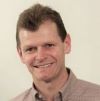
Mark Cheel
Chairperson / Faculty
We are pleased to introduce our newest Board member - Sandra Jefferies - who was elected at the recent Annual General Meeting
 Tells us about your current work
I am the Director and Principal Physiotherapist at Power Physiotherapy, Perth which I'm proud to say I opened in 1997, so we will be celebrating 25 years this year.
I have two fabulous Physiotherapists who work with me, and the bulk of our workload is Musculoskeletal Physiotherapy. Our caseload is always so varied on a daily basis which makes work always stimulating, enjoyable but of course sometimes frustrating.
We see people of all ages and all activity levels: from the sedentary office worker to the serious athlete. In addition, we see acute and chronic conditions, headaches as well as all spinal and peripheral joint injuries, soft tissue and tendon issues.
I work fulltime with a full caseload, but I also make time for mentoring my new grad and preparing professional development sessions with both my admin and physiotherapy staff. I thoroughly enjoy the teaching side of physiotherapy.
How did you start on your ‘McKenzie Method of Mechanical Diagnosis & Therapy (MDT)’ journey?
The McKenzie Method was (and probably still is) quite limited in Western Australia, however I was introduced to MDT through a colleague who at the time was the only credentialed McKenzie Therapist in Perth. She always talked about how she was using MDT with her patients and was getting great results. We talked about it extensively and the concepts excited me, so I wanted to know more.
When the opportunity came up to start the McKenzie journey I jumped at the chance and have not looked back. To be able to do all the parts of the course as well as the credentialing exam I had to travel to the east coast. That's how much I believed in this method and was committed to completing all of it up until the final exam to become the second credentialed McKenzie therapist in Perth in 2019.
How has the McKenzie Method influenced your clinical practice?
The most exciting part of the McKenzie Method was that it just made sense to me. The very clear concepts made clinical reasoning easy. Most importantly it also made sense to the patients when it was explained to them and they loved the fact that they could look after themselves and take charge of their self-care. When something makes sense to a patient, I find they are more compliant with their treatment plan.
I use the McKenzie Method every day with my patients. I thoroughly enjoy explaining it to patients and colleagues and believe the skills and knowledge that I have learnt through the McKenzie method have become a very powerful treatment method in my clinical practice.
What are the challenges your business has faced over the last 2 years due to COVID 19?
Luckily in Perth WA we have not really been impacted with COVID - 19 over the last 2 years, except for the occasional short lockdown. (However, as I write this, things are changing rapidly).
We have been able to keep working normally. However, during the short lockdowns, we made sure that we were on the phone with all our patients who were booked in and we had to cancel. We gave them advice over the phone and on occasion did Telehealth via Zoom.
Having the McKenzie skills and knowledge I was able to give patients advice on self-care methods and guide them through their condition and how to progress themselves. As McKenzie aims for patient self-care first, it was actually quite easy to continue to look after patients who were not able to attend face to face appointments.
Knowing what you know now, what piece of advice would you give your younger self?
I have been a Physiotherapist since 1988 and to this day I still love being a Physiotherapist and I love my profession. The one thing that I always say to my staff is, 'Knowledge is never ending. The second you think you know it all, then give up the profession.'
So, my main advice to my younger self and probably to anyone starting out in their Physiotherapy career would be to always surround yourself with people who have more knowledge than you. 'Be a sponge' and absorb all the information, experience, knowledge, and skills around you. Don't be frightened that you don't know something but think of this lack of knowledge as a challenge to jump on the journey to become an awesome clinician.
What's your favourite quote and why?
My favourite quote is 'Tell me and I forget. Teach me and I remember. Involve me and I learn'. -Benjamin Franklin
Learning excites me. Whenever I go to a course, you will see me in the first row. I'm not scared to ask a lot of questions and admit if I don't understand something. I always want to try a technique and get it right. I make a point of making the most of any opportunity that I have to listen, learn and absorb knowledge and skills from amazing people around me. This is what keeps me loving being a Physiotherapist.

Congratulations to MIA for another successful Education Weekend. I always look forward to this annual event focussing on a specific topic, this year being about the shoulder.
Both days had so many highlights. I had never heard Richard Rosedale from the McKenzie Institute International speak, so this was a great opportunity for me. On day one, hearing Richard speak about ’When is a shoulder problem not a shoulder problem’, was very informative, provided a lot of content and helped to consolidate the way I view and treat shoulders. It brought clarity to a complex problem that sometimes can create so much confusion.
The day progressed with group work and a case study. I always find the zoom breakout groups very helpful for clinical reasoning to ‘take apart’ an assessment. I enjoy hearing the perspective of other people and how they reach certain conclusions and what leads them in a specific direction of classification and treatment.
Day two was another awesome day of information with 4 speakers, Peter Schoch, Professor Richard Page. Mark Cheel and Helen Clare. Again, another first opportunity for me to hear Professor Richard Page (Orthopaedic surgeon), present from a surgical perspective. It was certainly a day jammed packed with information from so many different viewpoints and topics.
The MDT quizzes on both days were fun, challenging and helped to get a few cobwebs off the brain.
I completed the Education Weekend with a sense of clarity as well as confidence on how I treat shoulders. I enjoyed that so much information was backed up with scientific research and evidence.
Personally, I feel it’s always important to have an opportunity to refresh on different concepts, (as time goes by, sometimes it’s easy to forget things), listen to other people’s thoughts on assessment and treatment styles. I came away from this weekend with both theoretical and practical knowledge (both new and refreshed information), that I could use in the clinical setting immediately.
If you have never been to a McKenzie Institute Australia Education Weekend, then don’t miss out on the next one in 2023.
Sandra Jefferies, CredMDT
Another great MIA Education Weekend was to be had in 2022 and it was my first online via Zoom. Everything ran smoothly despite a couple of hitches with some people’s internet. I loved the fact that I could still be in touch with other likeminded clinicians despite these tricky Covid times. This year’s focus was on ‘The Shoulder.’
On Saturday morning it was a wonderful opportunity to hear Richard Rosedale (International Faculty) present ‘When is a shoulder problem not a shoulder problem?’. Giving up his time on a Friday evening joining us from Canada was really appreciated. The way Richard spoke about clearing the cervical spine made me reflect on my own clinical practice. I recalled some patients that I may not have tested enough repetitions or force alternatives with and therefore I may not have cleared the spine as thoroughly as I thought I had!
Richard’s clarity of assessment was inspiring. It was a great reminder not to forget the basics and to trust in and be guided by the MDT assessment process. I felt empowered to return to work the following week seeking to reassess some of those tricky and complex shoulders that hadn’t been responding as quickly as I had hoped.
The breakout group case studies were an excellent way to challenge clinical reasoning and assessment skills. The different patient outcome/response in each group was a fantastic way to hear other people’s approaches and thoughts. Input from Marg Campbell (New Zealand Faculty) was also a bonus of being on Zoom.
Sunday brought with it a host of delights including a fun Shoulder Quiz first thing to wake up the brain cells. All four presentations by Peter Schoch, Professor Richard Page, Mark Cheel and Helen Clare were a refreshing reminder of Shoulder ‘Diagnosis and Management’ backed up by research and evidence-based practice.
Professor Richard Page (Orthopaedic Surgeon) presented an update on surgical management of shoulders and I’m looking forward to the publication of his latest research. He was exceptionally generous with his knowledge and open to questions.
I left the weekend feeling “topped up” having challenged my clinical reasoning and revised my theoretical and clinical knowledge. I collected several new gems of information and practical skills. It was lovely to spend the weekend (despite not being face to face) with people who appreciate MDT as much as I do.
I’m very much looking forward to the 2023 Education Weekend and would encourage you to attend.
Sara Reed, CredMDT
Susan L Edmond , Mark W Werneke , David Grigsby , Michelle Young , Gary Harris
Food for thought in this recently published article from JMMT.
“Self efficacy: refers to an individual's belief in his or her capacity to execute behaviours necessary to produce specific performance attainments (Bandura, 1977, 1986, 1997). Self-efficacy reflects confidence in the ability to exert control over one's own motivation, behaviour, and social environment. These cognitive self-evaluations influence all manner of human experience, including the goals for which people strive, the amount of energy expended toward goal achievement, and likelihood of attaining particular levels of behavioural performance”. (American Psychological Association, 2022)
Click here to read the full article .....
Monitor the MIA website's Calendar of Events and follow us on social media for details of further courses, as they are released.
 |
Credentialling Exam |
 |
Part A - The Lumbar Spine |
 |
Part C - Advanced Lumbar Spine & Extremities - Lower Limb |
|
Part A - The Lumbar Spine |
 |
Part D - Advanced Cervical and Thoracic Spine & Extremities - Upper Limb |
 |
Part B - The Cervical & Thoracic Spine |
|
Part B - The Cervical & Thoracic Spine |
 |
 |
 |
Do you have something you’d like to share with other MDT trained clinicians? If so, please get in touch! Submissions to the newsletter are always welcome and contributions contribute to MDT CPD points for members. Tell us about an interesting clinical experience you’ve had, an article you’ve read or a case study that challenged you. Submissions can be emailed to: