

Welcome to the winter edition of the newsletter.
Some interesting reading in this edition following the very successful Education Weekend and AGM in Melbourne. Planning is already underway for the 2025 event, so be sure to keep space in your diary, so you don’t miss it!
We also bring you information about changes to the MII research support structure . If you’re involved in or considering MDT research, be sure to get in touch with the new research task force.
We get to know more about Tasmanian member Elke Rudolph, and, remind you we’re still on the lookout for people to be part of the mentoring program. If you haven’t registered your interest, you can still so.
You can also help out (and get some MDT CPD points) by contributing content to the newsletter. Share a case study or an update about how you’ve used or promoted MDT in your local area. You could also review an article and share your reflections.
Finally, to quote Benjamin Franklin: “ An investment in knowledge pays the best interest”, so don’t forget to check out our 2024 course schedule . We have face to face courses scheduled throughout the year. We’ve also added an online Part A in September. Save $$$ on travel and accommodation, whilst getting the benefits of a full lumbar spine course; all from the convenience of your own home! Credentialed and Diplomate members save 50% off the listed price of Part A-D courses.
With that, we hope you enjoy this edition and look forward to seeing you at an upcoming course.
Peter Schoch
Faculty
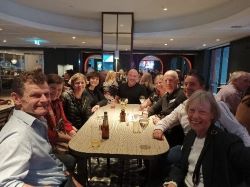
What a great time we had in Melbourne at the 2024 Education Weekend! Huge thank you to Mark Cheel for leading the organisation of the weekend and to those who participated, for making it such an interactive and collaborative learning experience!
Thanks to Sara and Sandra for their reflections on each day.
Planning is well under way for the 2025 Education Weekend, so be sure to keep space in your diary and stay tuned to MIA social media and website for further details.
Day 1: Talking Tendons. Current Concepts and Management
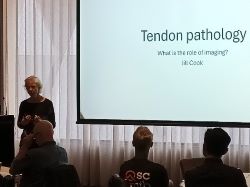
MIA’s 2024 Education Weekend began with the Seminar Day on Saturday 4 May in Melbourne. Wow, wow, wow what a day of “Talking Tendons”!! We were so very fortunate to be able to hear from three of the tendon world’s finest as our guest presenters.
Firstly, we heard from Emeritus Professor Jill Cook. Many thanks to Jill for riding into Melbourne CBD to join us on a very chilly morning. Jill was highly enthusiastic in sharing her tremendous knowledge of tendons with a reminder of tendon pathology and the continuum of tendon disrepair. She highlighted the pathology in reactive v’s degenerative v’s reactive on degenerative tendinopathies. It was great to hear Jill talk so passionately about the structural changes in these conditions. Jill’s takeaways made me feel that my knowledge had been “topped” up and refreshed from a pathology perspective.
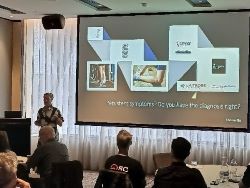
Next up we heard from Dr Ebonie Rio who had a bit of a turbulent journey from Sydney to reach us due to inclement weather but we were so grateful to her for generously sharing her time and knowledge with us. Ebonie’s enthusiasm for treating tendinopathy was contagious. She was so passionate about her subject! Ebonie shared with us clinical features of tendinopathy (including differential diagnosis of tendon v’s peri-tendon), management of mixed pathology, consideration of different load types and how to address these during rehabilitation. Ebonie’s top tips and a few of her treatment gems she shared on load speed got me thinking about a couple of the tricky tendinopathies I’m currently treating – that they may be the missing link so I felt empowered to return to work and re-assess those patients.
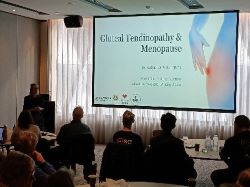
Our third guest speaker was Dr Rachael McMillan who spoke on Greater Trochanteric Pain Syndrome (GTPS) in relation to menopausal women. She presented the outcomes of the GLoBE Hip Trial (Cowen et al, 2022. AJSM). It was very interesting to hear about this trial and the impact that MRT (menopausal hormone therapy) may have on management of this condition. Rachael very generously shared a case study with us that generated some clinical discussion and reflection from an MDT perspective regarding clearing the spine. Rachael was extremely passionate about her research, and I will certainly consider sending any appropriate patients in the future to their GP with a copy of the GLoBE trial to see if MHT would be appropriate for them.
Our last speaker before lunch was MIA Faculty Member Peter Schoch who gave an outline of the LOADIT trial (Hasani et al, 2021). It was great to hear how the trial went with its positive outcomes and areas that were highlighted for improvement should a larger scale research project be undertaken. I enjoyed hearing about the research from someone who had been involved in the trial.
In the afternoon, we revised the MDT classification of Contractile Dysfunction, the importance of screening the spine and extremity diagnosis using the Extremity Algorithm. A good reminder for me was that the classification “contractile dysfunction” is much broader than just tendinopathy.
We then broke into smaller groups to work through some case studies. Once again this was excellent way to challenge clinical reasoning and assessment skills. Some great clinical discussion was had.
It was a wonderful day of shared knowledge and learning. I really enjoyed being with like-minded MDT clinicians and the clinical discussions that ensued.
I’m very much looking forward to the 2025 Education Weekend and would encourage you to attend!
Sara Reed
Day 2: MDT Update Day
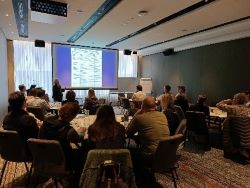 Another successful day, jam-packed with information.
Helen Clare started the morning with a revision of derangement and radicular symptoms of the lower limb. Three important areas were revised including Mechanically Unresponsive Radicular Syndrome, Adherent Nerve Root and finally Stenosis both central and foraminal. Features in the history and the physical examination were explored for each one as well as treatment.
After this intense session of ‘thinking’, we refueled with a lovely morning tea, to be ready for the next presentation by Helen on the Cervical Spine and radicular symptoms of the upper limb. The same categories were discussed as mentioned above with the stenosis focus being on foraminal. With both the cervical and lumbar presentations, we reviewed how this information would be presented on the assessment form.
During the day, Peter Schoch challenged our minds with the wonderful ‘Menti’ quiz. It’s always a challenge not only to get the answer right, but also to do it with speed. Do we love this quiz? Yes, I think we do.
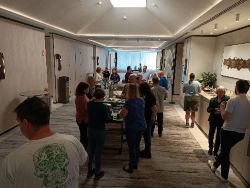 Another major topic for revision and discussion was Force Progression versus Force Alternatives. It was great discussing various presentations and what the management would be, particularly dependent on symptoms. It was helpful, considering difficult presentations that perhaps were ‘Worse’ and the direction of management from that.
Peter Schoch and Mark Cheel presented the practical component of the day focusing on two important techniques: Lateral shift correction of the lumbar spine and Retraction +/- extension of the cervical spine. Mark provided a video demonstrating the assessment and treatment of a real patient with a significant lateral shift. This highlighted the challenge to achieve the correction as well as the time that this correction could take.
Overall, Sunday – the ‘MDT Update Day’, was a great success! It provided the opportunity for discussion, revision, and exploration of difficult cases. It was wonderful to interact with colleagues from other states.
I would highly recommend the Education Weekend to anyone who may be thinking about it for next year.
Sandra Jefferies
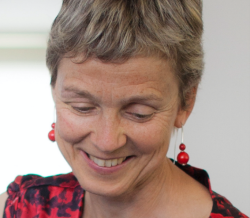
Thanks to ‘Tassie’ based member Elke Rudolph for sharing a little about what makes her tick!
Workplace
I work for myself, in a solo practice, in West Hobart, in rooms attached to my home.
Tell us about your current work?
My current work is an integration and evolution of the past 40 years of continuous education and experience gained by predominantly working in my own practice. My appointments are now 50-60minutes.
My current passion is to work with clients to help them understand and optimise their movement patterns, addressing both body and mind for pain relief and or improved performance. In the process, they learn to be more of an objective observer, noticing what activities and mind-sets affect their performance and or pain.
To this I bring a synthesis of my McKenzie and Alexander Technique training, Clinical Pilates, Pelvic Floor, Kinetic Link Training, life coaching and multiple Musculo-skeletal Physiotherapy courses.
The longer appointments allow me to address individual lifestyle factors in more detail and allow time to practice and integrate newly learned skills into ADL, including musical performances and sporting activities.
How did you get involved in the McKenzie Method?
After attending a McKenzie Method Part A course in Hobart in the late 1980s, I felt very attracted to the logical, comprehensive and sequential assessment approach. The foundational principles of the McKenzie Method of client education, with the aim of self-managing their symptoms, is something I highly valued.
How has the McKenzie Method influenced your clinical practice?
I use a McKenzie Method assessment form for most of my clients. I still value the logical, comprehensive and sequential format. The better/worse section is invaluable when starting to form a picture of the client’s issue, as is the visualising of their spinal curves, as part of their whole-body support and movement pattern.
I also value McKenzie’s early recognition of the importance of introducing the client to the concept of prevention, treatment and maintenance early in their treatment. (Now mainstream of course)
Knowing what you know now what advice would you give to your younger self?
Relax, be kind to yourself- no one else has figured it all out. The full connection between thinking/emotion/breath/pain/energy and movement is complex and is still being teased out. But follow your own path and you’ll have a lot of joy, meet some amazing people and have some amazing experiences on the way!
When you’re not working, what do you do for fun and relaxation?
I love to go bushwalking, sing in a choir, short jogs, Kinetic Link Training and other exercises in my own work gym. I am learning the piano and love to read in a hot bath.
If you weren’t working in healthcare, what do you think you would have done?
I have asked myself that question over the years but have never come up with an answer. I feel I am working in the right area for me.
What’s your favourite quote and why?
I have so many favourite quotes and they change frequently; I couldn’t possibly choose one, but I do appreciate a lot of Eckhart Tolle’s quotes.
 Dear Faculty and Branch Administrators
You will be aware that MII has had a Research Advisory Committee (RAC) in place since 2019. Its role was to act as an advisory body for clinicians interested in undertaking research on MDT. Unfortunately, it was underutilised. It is unclear why, but I am sure it was in part because of a lack of promotion.
During 2023 a number of the committee stepped down for various reasons, so this provided the perfect opportunity to evaluate its purpose. On behalf of all MII personnel, I would like to express thanks to those who served on the committee - Audrey Long, Carol Dionne, Stephen May, Yvonne Lindbäck, Ron Schenk, Hiroshi Takasaki and Mark Werneke. Special thanks to Audrey who was the Chairperson.
It was decided to approach the McKenzie USA Research Task Force about taking over the role of the RAC, to which they agreed.
The McKenzie USA Research Task Force (RTF) was established in 2022. This is a workgroup of clinicians and researchers committed to generating research related to Mechanical Diagnosis and Therapy (MDT). The RTF may also provide advice regarding MDT research that may have the greatest impact on musculoskeletal care, as well as suggestions on research design, method, or structure. They meet quarterly to provide updates on projects currently underway and generate ideas regarding future investigations.
The process of contacting them for advice is described on the MII website.
Expressions of interest to be involved in the RTF can be directed to Ron Schenk ronald.schenk@tufts.edu .
To ensure that their expertise is utilised, their existence needs to be promoted. Can you please tell course participants and as a Branch can you please promote them on your social media and in your newsletters.
Helen Clare
CEO
McKenzie Institute International
We’re still looking for more Credentialed and Diplomate members to participate in the MDT mentoring program, to assist Part A participants with their McKenzie MDT journey and encourage them to complete Parts A-E and the Credentialing exam.
Mentoring has benefits for both the mentor and the mentee. It can challenge your own clinical reasoning, test your existing knowledge, develop or consolidate teaching/coaching skills and it can be rewarding to see growth in less experienced clinicians. Mentoring also attracts MDT CPD points. The mentee of course gets the benefit of your knowledge and experience in a supportive environment.
The MIA Board will support members who agree to be mentors by hosting an online information session, at the start of the program, to outline MIA's expectations and to assist with any questions or concerns.
Please contact education@mckenzieinstituteaustralia.org to register your interest.
Sara Reed
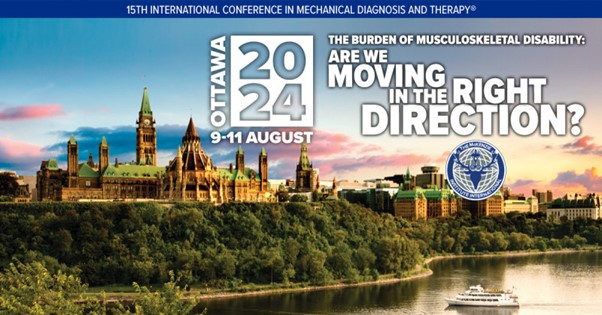
The 15th International Conference in MDT will be held in Ottawa, Canada in August 2024. Full details including conference programme, registration, travel and accommodation information available on the MII website: https://mckenzieinstitute.org/ottawa-2024/
Monitor the MIA website's Calendar of Events and follow us on social media for details of further courses, as they are released.
 |
Part A - The Lumbar Spine |
 |
Part B - The Cervical & Thoracic Spine |
|
Part A - The Lumbar Spine |
|
Part B - The Cervical & Thoracic Spine |
 |
Part C - Advanced Lumbar Spine & Extremities - Lower Limb |
 |
Case Manager Volumes 1, 2 & 3 |
 |
 |
 |
Do you have something you’d like to share with other MDT trained clinicians? If so, please get in touch! Submissions to the newsletter are always welcome and contributions contribute to MDT CPD points for members. Tell us about an interesting clinical experience you’ve had, an article you’ve read or a case study that challenged you. Submissions can be emailed to: education@mckenzieinstituteaustralia.org