

Anita Nicholas, Credentialed MDT - NSW Private Practice
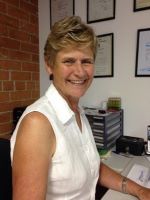
Tell us a bit about your current work
At present I’m working for myself 2 days a week at my own premises. I use McKenzie assessment for all clients. I always try using McKenzie treatment initially . If not successful I’ll try other methods.
How did you start on your MDT journey?
I started as a hospital Physiotherapist on rotation. Then I was employed in a Rehabilitation hospital. Then with my own young children I worked in paediatrics in the community for 14 years. At the age of 40 I decided I needed a career change and worked in private practise part time. Although I didn’t enjoy the practise, the owner introduced me to the McKenzie method. I then attended Part A and B and really appreciated the assessment method which I had never felt was taught very well at University. I then worked in another private practise which encouraged the use of the McKenzie method. I had great results and people actually got better, inspiring me to complete Part C and D and to do the credentialing exam. I then started my own practise initially at Pitt Town and then at Rouse Hill. After a couple of years I moved part of the practise to my home, which is in a rural setting.I then worked 2 days from there and 2 days from Rouse Hill.
How does MDT affect your current practice?
I have primarily used MDT in my practise. I have found Doctors are always convinced of the method if they have been treated themselves. I have some consistent referrals from Doctors but most of my referrals are by word of mouth from previous customers. I love my work as it is so encouraging when you help people look after their own bodies. As I’m getting older I am so grateful to MDT as I still have good thumbs and wrist which a lot of my colleagues have injured due to mobilising. I also continuously to do exercises to maintain my own mobility. I have also attended MDT study groups which were a great asset to my practise . Being able to brainstorm with the MDT practitioners was a good way to add to my treatment regimes. I have also attended 4 international conferences which were really inspiring. Meeting people from all over the world all using MDT and talking about the treatments and research that is happening in different countries.
What has impacted your practice recently?
In the last 10 years my colleague Kelly Thomas has conducted small pilates classes which has proved a great addition for maintaining stability for a lot of clients after their initial injury has subsided. Kelly is also a credentialed MDT Therapist and can assess clients as they are in the classes and modify any activities that need to be modified individually.
What advise would you give to a clinician starting out no their MDT journey?
I would suggest they do all the courses , don’t stop at Part A and B . Parts C and D are invaluable . Do the credentialing exam (even though it’s stressful) as it helps you to clarify your assessment technique and ability to diagnose. I would also recommend you join a study group of people using MDT. Fortunately with zoom or other online platforms this is becoming much more accessible. Try and find a practise to work in that uses MDT as you won’t get confused with other methods. Some physiotherapists who haven’t used the method can be negative as they like to keep people coming back for multiple treatments when they don’t need them when using MDT. People won’t need as many sessions with MDT but I have found they will refer you their friends and family members for treatment which will give you a great sense of satisfaction. Helping people recover and stay that way is what we are all about as a profession.